

As the film system questions itself, the work by Rafiki Fariala presented at the 79th edition of Cannes marks a turning point for collaboration between Italy, France, and Africa. A signal of vitality that starts from the heart of Bangui to reach the Croisette.
Faced with the complexity of the contemporary audiovisual market, discovery cinema returns to reclaim its space in the temple of Cinephilia. Congo Boy, directed by Rafiki Fariala and selected for the prestigious Un Certain Regard section, is not just a film, but the manifesto of an industry that still knows how to look ahead, transforming necessity into artistic virtue.
An Aesthetics of Resistance
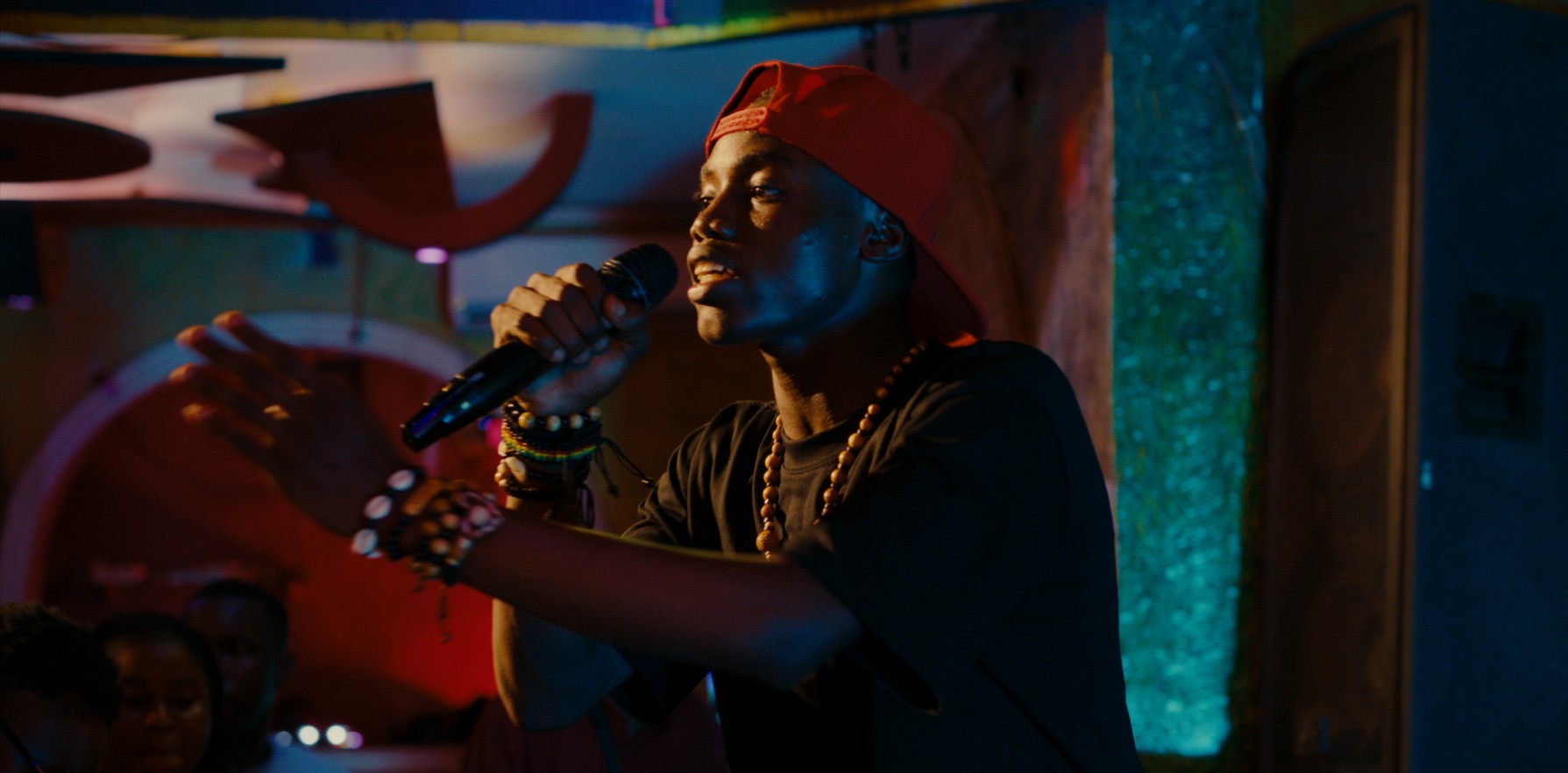
Written by Fariala together with Tommy Baron, with the collaboration of Boris Lojkine, “Congo Boy” moves along the thin line between a coming-of-age story and social drama. The film follows seventeen-year-old Robert in the heart of a wounded Central African Republic, where music is not a simple accessory, but a weapon of empowerment.
Fariala’s eye captures the vital energy of a generation that does not want to be defined only by conflict, but by its own creative voice. Robert’s transformation into his artistic alter ego “Congo Boy” thus becomes a powerful metaphor for cinema itself: the ability to reinvent oneself to survive and shine.
The Italian Model: Karta Film and Rai Cinema
The most significant aspect for industry professionals present on the Croisette is the production architecture supporting the work. “Congo Boy” is the result of a sophisticated synergy between the French company Unité, the Central African Makongo Films, and the Italian Karta Film.
The involvement of Rai Cinema in this project is no coincidence. In a period where national production faces structural challenges, the choice to invest in disruptive international voices demonstrates a forward-looking vision:
- Brand Internationalization: positioning talent in Official Selection projects strengthens the prestige of the national industry at international sales tables.
- Quality vs. Quantity: “Congo Boy” embodies the model of cinema that Cannes favors: authentic, visually refined, and capable of capturing the audience of festivals and arthouse theaters worldwide.
Why “Congo Boy” is the Film to Watch at Cannes
The film arrives on the Croisette with an impeccable production pedigree (Boris Lojkine and Caroline Nataf among the producers) and a narrative that blends the urgency of reality with a modern visual language.
In this scenario, the success of “Congo Boy” is a silent but decisive response to the uncertainties of the sector: a demonstration that when talent meets a solid and international production structure, geographical boundaries dissolve in favor of the pure power of the image.
For further insights into the Cannes film selection, consult the article https://cinema.video/svelata-la-selezione-del-festival-di-cannes-2026