

Veneto’s Film Sector Rides a Wave of International Momentum
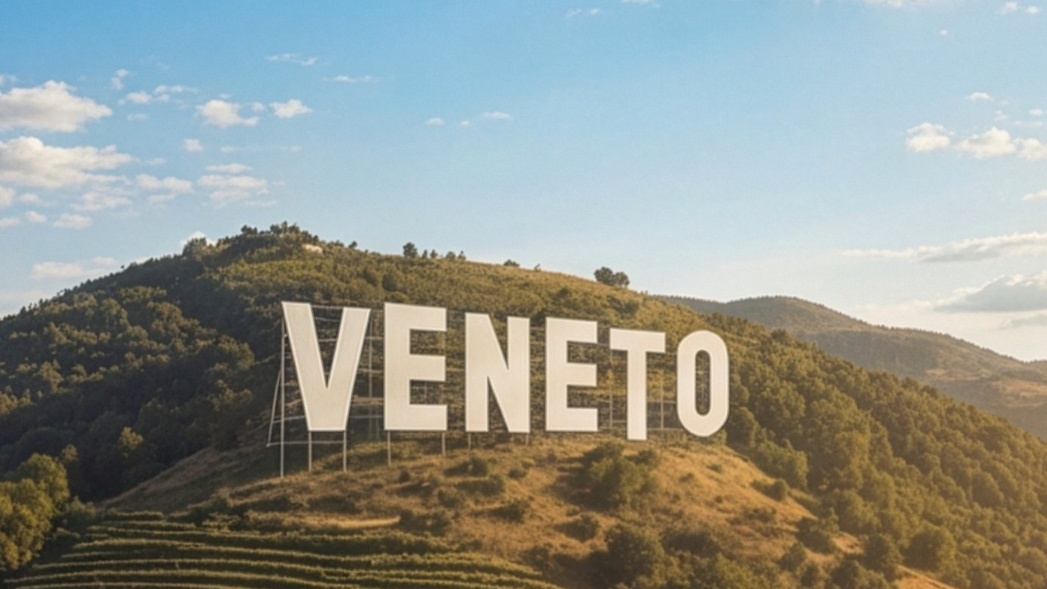
The “Veneto Wave” is crossing borders again.
Last year it was The Last One for the Road (Le città di pianura), Francesco Sossai’s debut feature, which premiered at Cannes in Un Certain Regard and went on to sweep this year’s David di Donatello awards with eight wins. Now it’s Mutrion — the only Italian short in the international Pardi di Domani competition at the 79th Locarno Film Festival — which just won the Best Director award. Shot among the islands of the Venice lagoon, the short digs into displacement, the cracks in the Northeast Italian model, and a return to one’s roots, carrying forward the aesthetic Sossai’s film helped establish. It’s directed by 26-year-old Venetian filmmaker Marco Cavazzin and produced by Venice-based indie studio Etimo, with backing from the Veneto Film Commission.
Is a distinctly Veneto cinema taking shape – one rooted in the region and carrying its own identity? Jacopo Chessa, director of the Veneto Film Commission, thinks so. “What’s filmed in Veneto reads as Veneto,” he says. “That’s not the case everywhere – in lots of regions, locations end up standing in for places they aren’t.” In other words, the locations themselves carry identity. “That’s an added value,” he adds.
The region turns up again in a far darker story: Se domani non torno, loosely based on Gino Cecchettin’s book Cara Giulia. Cecchettin’s 22-year-old daughter, a Veneto student, was killed in a femicide in November 2023 — a crime that shook the country to its core. Directed by Paola Randi and starring Tecla Bossi and Filippo Timi, the film traces the family’s private journey in the aftermath of Giulia’s murder, aiming to raise public awareness around gender-based violence. Shot in Padua and its province, it’s produced by Notorious Pictures, which will release it in Italian theaters this November — a month closely tied, symbolically, to efforts to combat violence against women.
Moving to series, there’s Stucky II, a police procedural based on the novels of Veneto-born author Fulvio Ervas, now riding a successful second season. Giuseppe Battiston is back as the eccentric, unflappable Inspector Stucky, cracking six new cases around Treviso.
Veneto’s uncertain, suspended horizons keep proving a natural fit for mystery and crime storytelling. Case in point: Costanza II, the second season of the drama-mystery series shot amid Verona’s historic walls and vineyards, and La proprietà, the psychological-thriller feature debut of Giada Bossi, currently shooting between Treviso, Vicenza and Fossalta di Piave.
There’s more: last summer, the Veneto coastline – Jesolo and Caorle – provided the backdrop for Morgen ist jetzt, the German remake of Spanish sci-fi comedy hit Mañana es hoy (Tomorrow Is Today), directed by Tarek Roehlinger and produced by W&B Television and Viola Film. Meanwhile, Ridley Scott picked Pian del Cansiglio, the plateau straddling Veneto and Friuli Venezia Giulia, for several scenes in The Dog Stars, the major upcoming 20th Century Fox/Disney production.
The takeaway: the region’s international appeal is no longer confined to Venice: it’s steadily spreading across the whole territory.
This success is built on solid groundwork: a stable regional system of financial support for productions, which the Film Commission can count on, extending to development funding as well. The relevant call for applications, €100,000 for companies with an operational base in Veneto, under de minimis rules, opens on September 1st and closes on October 13th.
Rising demand from productions is pushing the Veneto Region to build the infrastructure to support them properly, starting with the skilled workforce that forms its backbone. As a result, the regional government has made training a priority, backing a slate of initiatives that reflect film and audiovisual’s full recognition as an industrial sector.
That effort includes training programs aimed at upskilling audiovisual professionals and building expertise across the film trades. Launched last year under the Regional Program for the European Social Fund, the initiative has a €2 million budget financing 24 training projects: two year-long, highly specialized programs and 22 shorter qualification courses. Together they cover the whole sector – from acting to costume design, from color grading and image-optimization techniques in digital photography to hands-on location management workshops. The courses are set to wrap up by November 2026.
Meanwhile, the EU-funded project Green SCAP (Green Skills for Cinema and Audiovisual Production) wrapped up its final phase in Mallorca, Spain, in late July. Designed to help Sustainability Managers build the skills they need for work in audiovisual production, it was the third and final in-person workshop – the first two were held in Veneto and in Central Macedonia – under the EU’s Erasmus+ VET program, coordinated by Green Film and led by the Veneto Film Commission.
“It went well beyond a simple training course,” says Chessa. “Working with colleagues from other countries tested everyone’s skills, encouraged exchange, and built a solid network of mutual understanding and trust.” A wrap-up event with several of the Green SCAP tutors is planned at the Lido during the Venice Film Festival.
CINEMA AS A VEHICLE FOR CULTURAL GROWTH
Valeria Mantovan, Regional Councillor for Education, Training, Labor, Equal Opportunities and Culture, Veneto Region
This 83rd edition is your first Venice Film Festival. Do you have any announcements?
Facing the Venice International Film Festival in my first year as Councillor is deeply moving, but above all it’s a major responsibility. Venice is an extraordinary international showcase, and Veneto has every potential to strengthen its role in the audiovisual landscape – not just as a top-tier filming location, but as a territory capable of attracting productions and investment.
The Region’s goal is to keep building on this work, consolidating the support tools already in place and making them increasingly effective and responsive to the sector’s needs. To that end, we want to streamline procedures and guarantee clear timelines, so productions have a reliable, competitive environment to work in.
The Festival will also be a chance to engage directly with industry professionals and gather ideas and proposals that can further strengthen Veneto’s role as a reference point for the audiovisual industry.
You already had the chance to meet film professionals at Cannes last year. What did you take away from that experience?
Cannes was a crucial opportunity to engage with major international market players. The Region’s presence there, and the work done through meetings and institutional presentations, confirmed a clear trend: the global competition among regions to attract productions is no longer just about the beauty of the locations – it comes down to the strength of local services and the efficiency of the local ecosystem. Cannes pushed us to sharpen our internationalization strategy, working closely with the Veneto Film Commission. The relationships we built and the dialogue with foreign producers reinforced our decision to focus on two priorities: sustainability on set, and stronger integration between the audiovisual supply chain and the other key sectors of our economy – starting with tourism and fine craftsmanship. Cannes showed us that Veneto has everything it needs to be a reliable, competitive industrial partner at the European level.
Francesco Sossai’s The Last One for the Road (Le città di pianura) has become something of a landmark case – its success rewarded a new way of telling the story of the region.
Francesco Sossai’s story is the perfect example of what we mean when we talk about cinema as a vehicle for cultural growth and promotion. His path, and the success of his vision, speak to an authentic Veneto – far from stereotypes, yet able to become universal through the language of film.
Cinema that tells the story of a place isn’t simple postcard imagery or passive tourism promotion – it’s the ability to turn local identity, stories and landscapes into narratives that can travel the world and speak to a global audience. When a young talent born in our region breaks through at international festivals, it sets off an extraordinary virtuous circle: it fuels our communities’ cultural pride, while also proving that Veneto is fertile ground for contemporary creativity. Supporting filmmakers like Sossai means investing in the future of our identity – and proving that stories capable of winning over the world can come from Veneto.
A NETWORK CONNECTING EVERY PART OF THE AUDIOVISUAL SECTOR
Luigi Bacialli, President of the Veneto Film Commission
Back at the Venice Lido for another edition of the Film Festival, which I’m confident will once again exceed expectations. This is my seventh year as President of the Veneto Film Commission Foundation, and the second Board of Directors in the still-young history of this driving force for the audiovisual sector – an institution strongly championed by the then-President of the Veneto Region, Luca Zaia. This Board’s term will end in 2027, which will also mark the end of my own mandate, as I don’t intend to run again. I believe term limits should be respected for all major roles, including those dictated simply by common sense and a sense of proportion – with the exception of limits affecting those chosen directly by voters through preference votes. So it’s time to make room for others who share this passion for cinema and audiovisual: the sector needs fresh energy and strong expertise.
We’re now in the seventh year of the Veneto Film Commission Foundation, first managed by a Board whose members I want to acknowledge: Cecilia Valmarana, Giulia Lavarone, Vittorio Dalle Ore and Giacomo Brunoro, succeeded three years ago by the current Board – Maria Teresa De Gregorio, Valentina Montesarchio, Claudio De Donatis and Francesco Casarin. The results achieved over these years – including extraordinary growth for cinema in Veneto while keeping the books in order, with the added contribution of auditors Massimo Venturato and Paolo Castaldini – are owed to the valuable work of these board members, which -I always like to highlight- is unpaid. Ours has been a role of oversight and, as the numbers show, of sound and prudent management. The operational engine of the Veneto Film Commission has been, and remains, Director Jacopo Chessa – who last year was also appointed President of the Italian Film Commissions – together with his staff: Floriane Buono, Francesca Valente, Arianna Silvestrini and Elisa Penzo.
If the Veneto Film Commission’s role and work are recognized and valued internationally today, and are gaining increasing prominence at the Venice Film Festival itself, the credit belongs to this team of professionals – a constant presence at festivals and markets, and on the hundreds of sets that have brought major Italian and international productions to our region since 2019. These achievements have also been made possible by the steady, productive collaboration with the Region – first under President Zaia and Councillor Cristiano Corazzari, and today under President Alberto Stefani and Councillor Valeria Mantovan – all of whom are convinced of the enormous contribution cinema can make to the Region’s economy and image. A €20 million allocation to fund productions through public calls speaks to just how well the sector’s outsized impact on the region — and its remarkable ripple effects abroad — is understood.
Through its highly visited website, the Veneto Film Commission has built a network connecting every part of the audiovisual sector – including through professional training and a development fund launched right here in our Event Space, with the support of Veneto’s towns and cities, which are our supporting members. It’s teamwork that’s been recognized by Biennale President Pietrangelo Buttafuoco and Director Alberto Barbera – and this year, once again, it finds its best showcase and promotion in this dazzling edition of the Venice Film Festival.
More at Veneto Film Commission
Read more: Cinema & Video International Issue #208