
Wim Wenders won’t take offense if we borrow the title of his beautiful film Faraway, So Close! (1993) to describe the relationship binding the Venice International Film Festival to the Toronto International Film Festival.
For years the two events have lived in a state of near-physical proximity. They watch each other, study each other, flirt, compete, and pass the baton in the race toward the fall season, jointly celebrating the ritual that marks the end — and the beginning — of the film year.
In 2026 Venice runs from September 2 to 12, Toronto from September 10 to 20. Nineteen days during which the two festivals coexist, and which some industry professionals spend moving from one to the other without a break.
The Mostra, born in 1932 and recognized as the world’s oldest film festival, and TIFF, founded in 1976 as the Festival of Festivals, have grown along parallel paths to become, each in its own way, an unavoidable stop for anyone working in the audiovisual industry. 2025 marked Toronto’s fiftieth anniversary, a milestone celebrated with a retrospective on its own history, while 2026 marks a new chapter still being written for both festivals: the 83rd Mostra and the 51st edition of TIFF.
The fact that the two events have always been calendar “neighbors” is not an organizational detail but a structural condition that has come to define their very identity. Because while Venice seeks world exclusivity, the prestige of the absolute premiere, the red carpet and the judgment of critics, Toronto builds its own value in part on what happens in Venice just days earlier, turning a European world premiere into a North American launch. Two philosophies, two missions, two ways of understanding cinema as an event worth telling side by side.
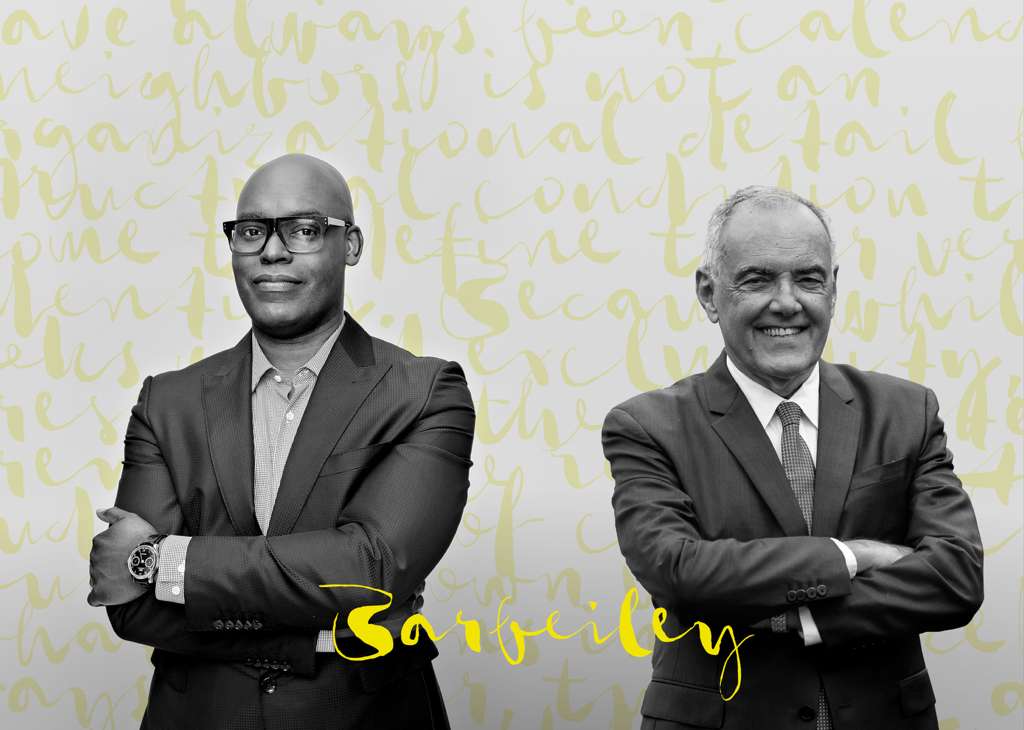
Barbeiley
Leading the Venice Mostra is, for 15 consecutive editions now (plus an earlier term between 1998 and 2002), Alberto Barbera, who by now can add diplomat and tightrope-walker to his job title of “festival director.” His task, edition after edition, is to reconcile a vocation for the most radical languages and the most authoritative auteurs with the dose of glamour needed to guarantee media coverage, sponsors and a general audience. It is a job made of negotiations, concessions and instincts that remain almost always invisible to the viewer, and which Barbera carries out by making room for uncomfortable voices, protecting authorial expression and taking chances on filmmakers the market sometimes considers in decline or ignores altogether — while always keeping the dialogue open with distributors, investors and industry.
On the other side of the Atlantic, TIFF is led by Cameron Bailey, a figure who knows the festival literally from the inside. He joined as a seasonal programmer in 1990, became artistic director in 2012 and finally CEO in 2021. Thirty years of shared history with the festival have let him move through every phase of it — as programmer, curator and executive — while always keeping a strong tie to Canadian cinema. But the challenge Bailey faces today differs from that of his predecessors. Toronto must remain North America’s great popular festival without sliding into a mere showcase for the studios, while at the same time strengthening its industry weight. That is the direction of 2026’s most significant novelty, TIFF: The Market, the festival’s new official market running September 10–16 at the Metro Toronto Convention Centre.
Barbera and Bailey thus represent two complementary rather than opposing directions. One safeguards and relaunches the prestige of auteur selection in a competitive context that remains Venice’s identitarian core. The other runs a festival that has made non-competitiveness and a direct relationship with the audience its banner, and that today is trying to add an industrial infrastructure it never had before. They are, in a sense, the opposite and complementary tightrope-walkers of one and the same September.
Coextensive Philosophies
Venice’s mission remains, first and foremost, the pursuit of authorial cinematic expression. The official selection, the Golden Lion competition, the Mostra’s prestige and the symbolic force of the Lido build a festival designed for cinema that takes risks, experiments with language, and puts back at the center authors often overlooked by the market. It’s the logic that brings names like Werner Herzog back to Venice (who had already received an honorary Golden Lion in 2025) who turned down a slot in Cannes just to stay in competition at the Lido with his film Bucking Fastard, or that allows Nanni Moretti’s return after thirty-seven years’ absence from the Venice competition. But this authorial vocation has always coexisted with an equally necessary second track: glamour. The red carpet remains integral to the Mostra’s identity, and 2026 confirms it with presences such as Robert Pattinson, star and producer of Primetime, or Noel and Liam Gallagher, expected for the documentary Oasis: Don’t Look Back In Anger.
Toronto pursues its own philosophy instead. The absence of a traditional competition remains one of the festival’s strongest identity traits, because it is a festival for the audience, which has the honor of handing out the festival’s top prize, the People’s Choice Award. Over time, this mission has become a valuable laboratory for understanding the relationship between cinema and audiences.
Past winners of the People’s Choice Award include films such as Chariots of Fire, Slumdog Millionaire, The Fabelmans and Three Billboards Outside Ebbing, Missouri, which, presented at Venice just days earlier in 2017, won the award for Best Screenplay there.
But with TIFF: The Market, Toronto is no longer content to simply chase the North American audience and press. The goal is to also become a place for business deals and networking, following in the footsteps of Cannes
and Berlin.
The Films That Travel
The most telling way to understand the relationship between the two festivals is to look at the films that pass through both.
One is Bunker by Florian Zeller, a psychological thriller with Javier Bardem and Penélope Cruz as a couple whose relationship is destabilized by an architectural commission for a bunker commissioned by a powerful tech magnate, with a cast rounded out by Paul Dano, Stephen Graham and Patrick Schwarzenegger. The film premieres in competition at Venice and arrives in Toronto a few days later as a North American Premiere.
The same path is followed by Ink, Danny Boyle’s film chosen by Venice as its opening title on September 2. Set in the 1960s, it tells the story of the birth and rise of the British tabloid The Sun, with Guy Pearce as Rupert Murdoch and Jack O’Connell as editor Larry Lamb. In Toronto it screens as a Canadian Premiere.
Master filmmaker Hirokazu Kore-eda also makes the double trip with Look Back, a live-action adaptation of the manga by Tatsuki Fujimoto; so does Lee Chang-dong with Possible Love, the story of two couples’ lives intersecting, and Shinya Tsukamoto with Mr. Nelson, Did You Kill People?, a portrait of a Black American Vietnam War veteran.
To these titles is added the Italian thriller The Spiral (L’Estranea), directed by Paolo Strippoli, which flies from the Lido competition to Toronto’s official selection Midnight Madness, to then land in Austin’s Fantastic Fest where Strippoli debuted with his first solo feature Flowing back in 2022.
Martin McDonagh, a two-time Venice screenplay winner, returns to competition with Wild Horse Nine, starring John Malkovich, Sam Rockwell and Steve Buscemi. Also generating buzz: Nanni Moretti’s first Lido title since 1989, It Will Happen Tonight (Succederà questa notte), with Louis Garrel and Jasmine Trinca, and Marco Bechis’s Back to Buenos Aires (Ritorno a Buenos Aires). Other Italians in competition include Edoardo De Angelis, Andrea Pallaoro and the already mentioned Paolo Strippoli, while Casey Affleck competes for the Golden Lion as director with Company. French cinema is represented by Stéphane Brizé, Cédric Kahn and Nicolas Pariser.
Out of competition, Paul Schrader returns, alongside Kiefer Sutherland and Al Pacino’s Father Joe, Gianni Amelio’s No Pain (Nessun dolore), Mario Martone’s Trick (Scherzetto), and closing film Dio ride by Giovanni Veronesi with Pierfrancesco Favino. The Mostra also embraces riskier fare: Ilya Khrzhanovsky’s DAU, Ali Asgari’s A Bit of Light (Kami nour), Alex Gibney’s Elon Musk documentary, and Laura Poitras’s short on ICE protests. Of twenty competition titles, only one is directed by a woman, Denmark’s May el-Toukhy; jury president Maggie Gyllenhaal will present her own short, Flesh Impact.
Toronto, by contrast, leans on premieres of its own. Opening night belongs to Siân Heder’s Being Heumann; Peter Farrelly returns with I Play Rocky, Chris Rock directs Misty Green for A24, and Jesse Eisenberg presents The Debut. Also on the slate: John Madden’s Onwards and Sideways, Anton Corbijn’s A Talent for Murder with Helen Mirren, and Mike Leigh’s Tender Loving Care, alongside Cannes holdovers Bitter Christmas (Almodóvar), Fjord (Mungiu), Minotaur (Zvyagintsev) and The Beloved (Sorogoyen), confirming Toronto’s parallel role as an awards-season launchpad.
Two Continents, One Festival Latitude
There is an image, taken from a superhero film, that perhaps better than any analysis captures the meaning of this two-pronged September. In Spider-Man: Homecoming, the hero is suspended between the two halves of a ferry split in two, arms outstretched as if on a cross, holding the two pieces together with his webbing in a desperate attempt to reunite them. It’s the image that best represents the directors of major festivals, forced every year to hold together authorial research and glamour, art and market. But it’s also, if you widen the frame, the perfect image for the relationship between Venice and Toronto: two halves of the same vessel, separated by an ocean and by a matter of hours on the calendar, held together not by a superhero but by shared titles, authors traveling from one continent to the other, producers choosing both stages.
Venice carries the weight of history, of criticism, of the most demanding selection. Toronto carries the strength of the audience, North American industrial scale and, as of this year, a genuine market of its own. Two ways of answering the same question: what does cinema need to live on glory as much as on box office?
The Markets, and the Business of the Festivals
If the largest public film festival in the world adds a market at its core after half a century of history, something is clearly changing. Now, close your eyes and try to remember when critics used to be the gatekeepers of a title’s destiny. Do you miss it? Then, for a very brief moment in the digital world we were under the illusion that we lived in a democracy of information, until we realized there was the algorithm. But there is a measurement system that does not lie: the audience. That audience is in person and at its largest at TIFF (plus being clearly the thermostat of the Oscars in the past years), and there is no better position for a buyer than sitting next to it, ready to sign a deal.
The Government of Canada invested $23 million CAD (approx. $16.7 million USD) to create a market aligned with the Festival — one whose ecosystem draws 700,000 visitors annually and generates $174 million USD in economic activity every year. The numbers speak clearly: the Festival is a business. And after fifty years without one, that business now has a name: TIFF: The Market.
A-league Summit speakers and strong buyer participation are expected. “These confirmations reflect a concerted effort to respond to the requests from sellers, globally, for a robust contingency of buyers to be in attendance,” said Charles Tremblay, Head of TIFF: The Market. Attendance includes a high number of film distributors, as well as buyers of series and immersive content in the Innovation Hub. The formula is deceptively simple: place a market at the center of the audience conversation.
“The alignment of TIFF: The Market with our annual Festival provides a unique opportunity for buyers and distributors,” said Cameron Bailey (CEO, TIFF). “As the largest public film festival in the world, there is no better place than TIFF to get a pulse on what is resonating with audiences.”
On the other hand, the Venice Production Bridge bills itself as “an essential and successful rendez-vous among the cinema, audiovisual and VR professionals.”
Evolution is indeed in the DNA of this market. The VPB was introduced in 2016, at the 73rd Mostra, as a new “umbrella” that reorganized and expanded the industry activities already running on the Lido, under the Venice Film Market, born in 2012. Since then, the VPB has kept growing by tucking more and more programs under the same brand, like a Russian doll.
Its stated mission is to cover a film’s entire production chain, from intellectual property all the way to distribution, spread across its various sections: the Book Adaptation Rights Market, the Venice Gap-Financing Market, Final Cut in Venice, Meet the Streamers, and the Venice Immersive Market.
As further proof of that restless evolution, this year marks the debut of the VPB Locations Market, dedicated to production studios, filming locations and tax incentives worldwide.
At the helm of the Venice Production Bridge is Pascal Diot, who has been running the show since its 2012 launch (before the rebrand) and who now shares programming duties with Savina Neirotti. That makes Diot one of the longest-serving, most continuously in-charge figures among Europe’s film market bosses, who outlasted several festival directors along the way.
And keep an eye on the calendar: the VPB wraps three days before the Venice Film Festival itself, precisely so industry professionals can catch their flight to Toronto without any overlap. A small detail that says a lot about a market built around producers’ needs, rather than one content to be an island unto itself.
Read more: Cinema & Video International Issue #208