

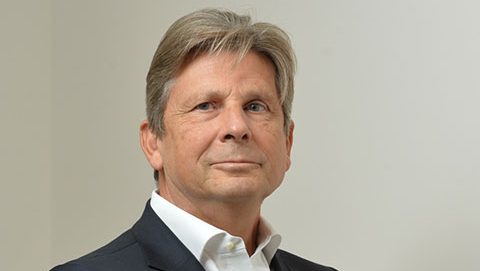
From 16 to 20 September, the Visioni dal Mondo International Documentary Festival returns to Milan for its 12th edition. Founded by Francesco Bizzarri and led by Artistic Director Maurizio Nichetti, in the past 12 years the festival has established itself as one of Italy’s key events for the international documentary sector. This year’s programme includes 9 international titles from Europe, Asia, Africa and the United States, alongside 20 world premieres of Italian documentaries and 7 immersive works from Italy, France, Germany, Saudi Arabia, Austria and the Netherlands. The festival’s industry programme, Visioni Incontra, directed by Cinzia Masòtina, will also present 19 projects across its Final Development and Work in Progress sections. We met Francesco Bizzarri to discuss the festival’s evolution and explore the past, present and future of the documentary sector.
What makes Visioni dal Mondo a distinctive event on the Italian and, more broadly, the European scene?
Twelve years ago, we set out to launch a festival dedicated to non-fiction cinema — to the documentary genre in its feature-length form for theatrical release — to which we later added shorter formats designed for television and streaming platforms, with the aim of discovering new talents and new directors through the New Talents Short Docs section.
Unlike the roughly 300 festivals active in Italy, ours was conceived as an auteur festival, created above all to support the Italian documentary system, and it is closely integrated with the industry’s production and distribution networks.
Through its Industry section, the festival also identifies and facilitates funding opportunities and pre-acquisitions. Since its founding, the festival has built a network of international relationships aimed at promoting the export of Italian documentaries abroad, with particular attention to more advanced markets such as Canada, the United States and Northern Europe, in order to raise their quality.
Compared to other festivals, ours was conceived from the outset as a professional project that, through these national and international alliances, works to promote Italian documentary filmmaking — not for profit, but on a break-even basis — with the goal of supporting its qualitative growth and international visibility.
How has the event’s original vision evolved over twelve years of the Festival, particularly in light of the industry’s profound changes?
Over the past twelve years the industry has changed profoundly, with positive effects on the documentary genre, even though streaming platforms tend to favor more commercial documentaries, in line with the habits of an audience accustomed to fiction and series. The most significant shift concerns length: while a 52-minute documentary remains a valid format, platforms have changed how content is consumed — partly because viewing has shifted into the home, and partly because of the spread of shorter formats. The festival has followed this evolution, opening up to feature-length and medium-length works, and subsequently to titles coming from film schools, independent production, and first or second works.
And documentary series?
The serial format remains a gamble for documentary. While in fiction the showrunner model is now well established, it is harder to apply in documentary, and it is also more difficult to sustain audience attention across six to eight episodes — particularly when tackling, as we do, snapshots of contemporary reality: war, migration, the identity crises of different peoples, technology, and processes of social change.
Added to this is the question of budget, which in Italy is significantly lower than what is allocated to productions in Northern Europe or the UK. The most substantial resources remain in the hands of the platforms, which in Italy work mainly with four or five production companies. One notable example is SanPa (San Patrignano), one of the few productions to have also reached international markets, alongside some true-crime productions.
It is much harder for independent production to access these same budgets. That said, there has been greater openness than in the past: specialized platforms such as MYmovies have emerged, for instance, giving space to higher-quality cinema and documentary work. We hope these new platforms can grow and establish themselves, despite the presence of major American players with far greater resources and a rather different market logic.
This year’s theme, “Beyond the Border,” puts the spotlight on stories from the past and present that transcend geographic, social, cultural, identity-based and inner boundaries. How can documentary film build a bridge between past and present and continue to speak meaningfully to today’s audiences?
In recent years we have witnessed a period of deep crisis, marked by wars and a political climate that fuels superficial forms of nationalism, putting at risk gains built up over the past fifty or sixty years. This resurgence of nationalism, unfortunately widespread globally, leads nowhere constructive.
With this year’s theme, we aim to identify works and open a reflection capable of overcoming cultural, economic, artistic and social pseudo-limits, in favor of a condition free of borders. Documentary remains the genre best suited to telling the stories of today, combining analysis of contemporary reality with archival and historical research into what preceded the present moment.
Looking at the audience, do you think documentary can help younger generations reconnect with the reality around them? And does its language need to evolve to reach them?
Yes, that evolution is necessary — otherwise the genre risks losing relevance. Both length and subject matter play a decisive role: biographical documentaries centered on prominent figures generally achieve greater success, both on platforms and in theaters. In these cases, the storytelling itself is not necessarily innovative, but it is the fame of the subject that generates the greatest pull. Unlike fiction film, where audiences are often drawn in by well-known actors, in documentary the added value lies in the real protagonists of the stories being told.
Themes, titles, format and storytelling approach are therefore all important. This year we will hold a panel on the true-crime genre, which resonates with younger audiences through more contemporary storytelling approaches. It is harder to tackle broader or weightier subjects, although a segment of the younger audience — somewhat more activist in outlook — shows growing interest in issues such as environmental protection, climate change and civil rights.
The Festival also has a section dedicated to immersive works. From your perspective, do immersive languages today represent a meeting point between documentary and technological innovation?
This is an area I consider a personal mission, one that began through our collaboration with the National Museum of Science and Technology. Immersive technology is constantly evolving, but it still has limitations: the sheer number of different technologies available, high costs, and the lack of universal standards are slowing the sector’s development. There is also a lack of an established market: experimentation remains largely confined to museums, and to medical and architectural applications.
Until two years ago, Italy was producing 70–80 immersive works a year, compared with 500 in France and an even higher number in the United States. Productions in fiction, documentary or gaming built around this technology are driven mainly by interactivity, rather than by content or narrative in the strict sense. Gaming is the most advanced sector in this respect, while documentary lags behind, given the greater technical and production challenges involved.
For us, it’s a stimulating challenge nonetheless. The works selected this year address subjects such as climate change, historical figures and art, through a more interactive and engaging approach. I don’t yet see a consolidated mass market, but I believe it’s essential to have a presence in this space — following the example of companies like Luxottica, which through its technology partnership with Meta has established itself firmly in the “tech gadget” market. In the meantime, we continue to monitor developments in the sector, both in Italy and abroad: this year the festival features seven immersive works in competition, including one from Saudi Arabia.
Visioni dal Mondo is also an important platform for previewing Italian documentaries. Drawing on your experience in the media industry, how do you assess this sector’s ability to compete internationally?
One of the main weaknesses of the Italian documentary system, as already mentioned, is budget. Talent is not lacking — we have great directors, some well known and others less so — but funding for documentary in Italy comes mainly from public sources, both national and, even more so, regional. As a result, the subjects covered are often shaped by local or regional interests rather than by issues of major national or international relevance.
An international outlook is now essential. That’s why we make a point of attending nearly all of the major European festivals, in order to promote Italian documentary production: we have partnered with leading European festivals such as those in Munich, Copenhagen, Nyon (Visions du Réel) and Warsaw, in a constant effort to build recognition for the interesting work being produced in Italy.
In my view, co-production is the most effective way to generate interest among international distributors and ensure that a project reaches audiences in multiple countries. It’s demanding work that requires a physical presence: attending events such as IDFA in Amsterdam and CPH:DOX in Copenhagen, or hosting international producers in Italy, is essential for building dialogue and exchanging ideas and expertise.
This year we will welcome a Swiss delegation of funds, producers and broadcasters, visiting for direct meetings with their Italian counterparts. For next year, meetings with Poland are already planned, with the aim of further strengthening the international visibility of the Italian documentary sector.