


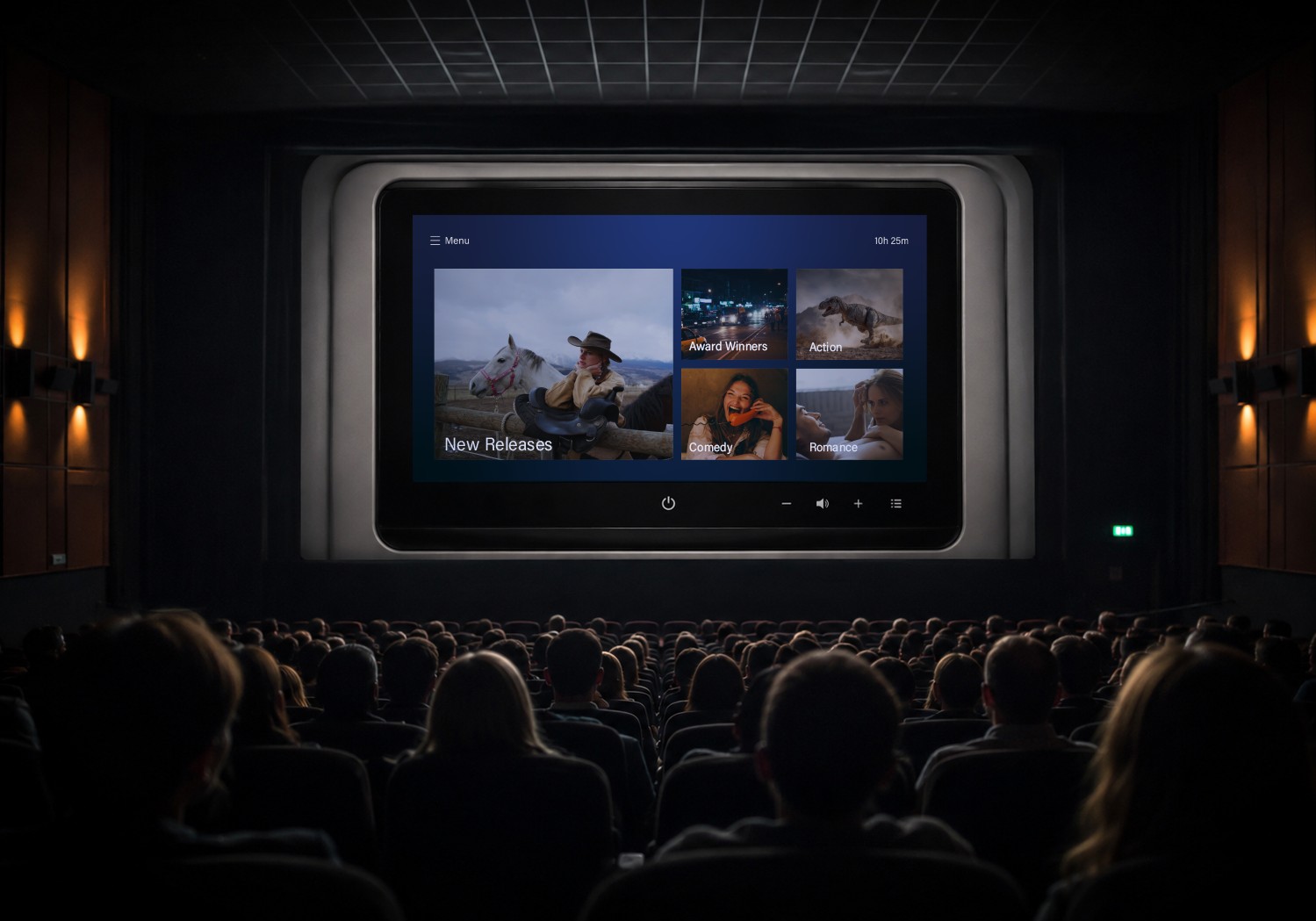
In the frantic distribution chase, inflight entertainment is the odd corner of the hunt: a small field with its own players and rules. We talked to several experts to bring our readers the most useful advice.
What is Inflight Entertainment Distribution?
First, let’s be clear about what we’re dealing with. Inflight falls under the umbrella of non-theatrical rights — the same category that covers festivals, schools, and hotels — but travel and transport (planes, ships, trains) is its own slice with its own players. Airlines usually get handed to specialized Inflight Entertainment (IFE) brokers. These brokers bundle titles from multiple distributors into libraries with enough scale to matter to an airline, and they also curate catalogues, handle compliance and censorship edits, and package titles specifically for airlines. On the buying side, airlines rarely deal with content directly: they lean on Content Service Providers (CSPs) instead, who curate, manage, and deliver the monthly entertainment lineups based on airline budgets.
At cinema.video, we researched and interviewed professionals, so our readers gain a global comprehension of the landscape before handing rights over to massive library holders. In an ultra-fragmented market generating over $300 million annually in content licensing fees, crucial knowledge often gets lost in the meanders of secondary distribution.
The Step By Step Guide to Sell Inflight Entertainment
Here is what rights holders need to pay attention to while navigating this environment in order to protect their downside before signing any deal.
To navigate this system, you first need to make sure you actually have the rights. Be careful — non-theatrical rights can easily get wiped away unnoticed in other deals due to vague or overly broad rights language in other agreements.
First, rights on hand, budget and/or prepare for an “Airline Cut” master that removes explicit violence, nudity, religious sensitivities, or aviation mishaps.
Then Target Key Gatekeepers: specialized IFE distributors and attend Dedicated Trade Hubs.
Once you get your offer, determine if the IFE broker is making an outright flat-fee purchase or providing a Minimum Guarantee (MG) backed by a revenue-share model. These are both valid solutions for different purposes.
If you’re handling Early Window Content, things get trickier. EWC stands for a recent release usually licensed to an airline 40 to 90 days after its theatrical run — before home video, TV or streaming. This is considered “premium” content by an airline company. The hard part is pricing it fairly, since nobody yet knows how the film will perform. To cover yourself, include an escalator (Escalation Clause) upfront in the contract, in case the title takes off at festivals or the box office. If you believe in a recent release and trust in the IFE and CSP credit score and regarding their auditing and revenue-share compliance, then you want an escalator (Escalation Clause).If you don’t know what an Escalation Clause is, check this article.(Link) This helps smaller and independent producers getting a fair compensation if a recent released title picks up momentum.
One more tip: get your Airline Cut ready early, so you’re not rushing to edit after you’ve already signed the deal. Violence, nudity, or plane crash scenes can jeopardize your deal — take those out ahead of time.
Proposing niche or independent titles to a broad, varied audience is difficult—which is exactly why passengers so often end up watching the fourth season of a 20-year-old sitcom that slaps, but offers zero incremental value for new releases. So airlines often prefer old catalog titles instead of recent releases.
Also, major streaming platforms deals are increasingly favored. Air France now runs Apple TV+ onboard; United has a dedicated Peacock channel; China Airlines added Disney+ through CSP Stellar Entertainment. Airlines are ceding their curation role to platforms with deeper libraries and faster connectivity.
None of this should scare independent rights holders off: This is still a high-margin window that can bring 80–90%+ of gross licensing revenue to the right holder (because airlines cover marketing and exhibition costs). None of this happens by cold-calling airlines directly, either. Go through the “gatekeepers” aka IFE brokers like Encore Inflight or Skyline, or CSPs like Spafax who hangout at specialized markets like the APEX Content Market, or film markets like Cannes Marche du Film, EFM, and AFM.
Remember: revenues for streaming are rarely being accounted for in the revenue-share model for a lack of legislation on BYOD (Bring Your Own Device) and native streaming services, revenue-sharing is usually generated from second waves of airline-buyers.
After that make sure to Define Your Licensing Window: Be explicit about which window you are selling, making sure airline licensing doesn’t trigger contract breaches on past agreements and/or in other territories.
While the market is vast, commercial success ultimately comes down to targeted strategy, reliable industry connections, and key trade gatherings where rights holders can present their libraries.
Inflight Entertainment is now an active, high-yield asset class. While the rise of onboard satellite streaming and BYOD (Bring Your Own Device) hardware has shifted how content reaches the core financial incentive for rights holders remains unchanged: direct-to-bottom-line cash flow with zero P&A drag.
Discover the full list of Inflight Buyers
For Advertising opportunities on Cinema & Video International for the Inflight Market contact: advertise@cinema.video