


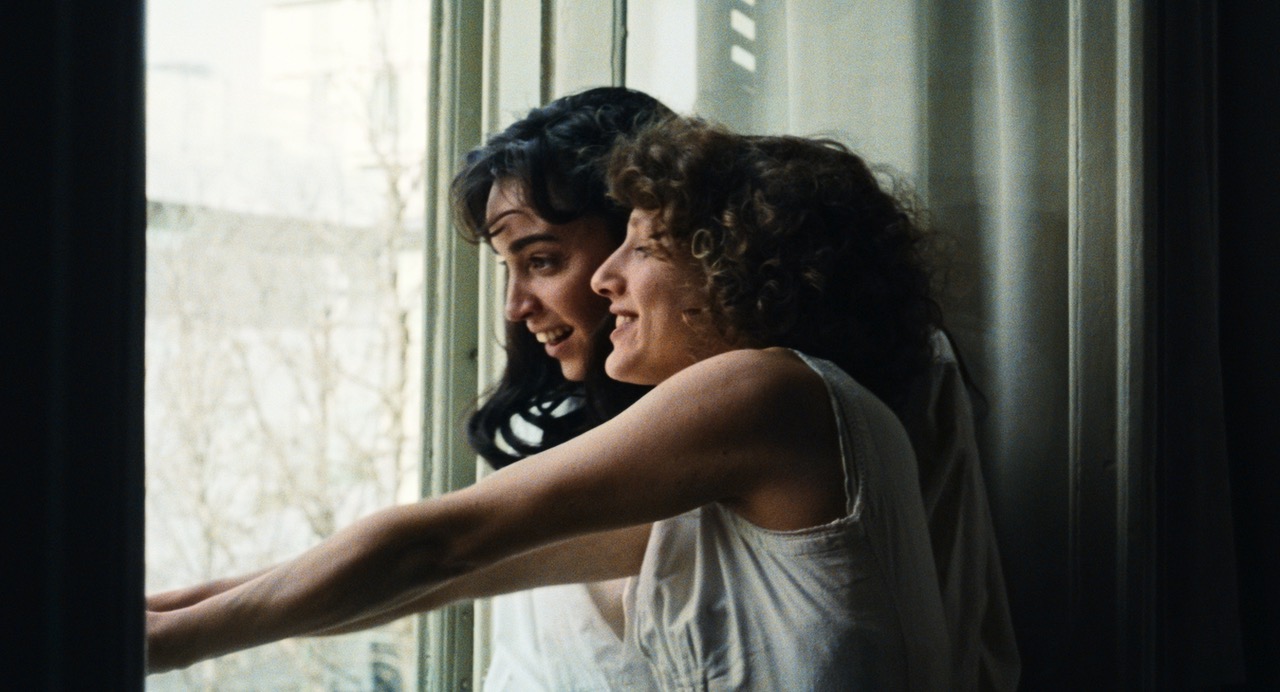
Cannes Classic, opened by the French-Italian co-production The Golden Age, was this year somewhat the safe heaven at the 79th Cannes Film Festival for Italy, whose lack of films in the main selection was lamented and missed
In the sectiondedicated to highlighting the preservation work done by production companies, rights holders, film archives, film libraries and national archives around the world, now an essential part of the Official Selection, there were six titles involving Italy.
Three restored films: The Innocent by Luchino Visconti,Two Women by Vittorio De Sica and Love Circle a Cena by Giuseppe Patroni Griffi, which also featured a talk by its screenwriter Dario Argento, at the Fantastic Pavillion.
Three new productions, one of which is entirely Italian, Vittorio De Sica – Staging Lif) by Francesco Zippel (the only one at the festival, along with Oh Boys by Antonio Donato), and two co-productions: The Golden Age by Bérenger Thouin, and Nostalgia for the Future by Brecht De Bachere.
Vittorio De Sica – Staging Life has Wes Andersonamong the executive producers. Anderson is also part of the ‘cast’ along with Ruben Östlund, Jean-Pierre Dardenne, Luc Dardenne, Brando De Sica, Maria Teresa De Sica, Andrej Zvjagincev, Andrea De Sica, Gian Luca Farinelli, Jean A. Gili, Francis Ford Coppola, Nicola Piovani, Luciano De Ambrosis, Carlo Verdone, Asghar Farhadi, Dominique Sanda,. Thanks to their unpublished accounts, rare archival materials, the film traces the life and De Sica’s work, highlighting the modernity of his gaze. It is produced by Quoiat Films, Luce Cinecittà, Movimenti Production, and Sky. It will soon arrive in theaters with Fandango Distribuzione, and later will be available on Sky and NOW.
Gianluca Farinelli, director of the Cineteca of Bologna is also linked to The Golden Age produced by French GoGoGo Films, about which he said, “There will be a before and after for this film.” Italian co-producer Erica Capra, of GraffitiDoc, enthusiastically reveals this to us : on the opening night of the section, Thierry Frémaux, delegate general of the Cannes Film Festival, called it an extraordinary film. “And he has already booked it for the Cinemateque in Lyon!”
It is a fictional film, tracing the history of the 1900s through the stories of two unconventional women, one French (Souheila Yacoub), Jeanne, a butcher’s daughter and later a countess, and one Italian, Celeste (Yle Yara Vianello) an intrepid revolutionary. Its peculiarity lies, Capra explains, “in having been conceived from the archives, being in fact edited before being written. That is, all the historical scenes are derived from archives of documentary footage, so the story was continually rewritten so that the fictional scenes would fit perfectly and be almost an extension of it, from the point of view of set design, lighting, and costumes. The joints are so perfect that one does not notice the transition from one to the other.” With an aesthetic that evolves along with the era and the history of cinema, because the film begins precisely in the early 1900s, close to the birth of cinema, in fact, and ends with the Florence flood in 1966.
Italy is very much present; half of the film is shot in Piedmont (with support from the Region and Film Commission Torino Piemonte), in all the castles in and around Turin, which “have retained very strong historical patina.” These include Palazzo Carignano, Castello Ducale in Agliè, Castello Provana in Collegno, and Virle Castle.
The Golden Age is also produced thanks to MIC, Eurimages, Canal+, Ciné+ OCS, Région Occitanie, Région Nouvelle-Aquitaine, Département de Lot-et-Garonne, Département de la Charente, Cinéventure. It is sold worldwide by Films Boutique: in France it will be distributed by Pyramide in November; in Italy it will arrive in early 2027 with Lucky Red. It has also been sold in Turkey to Bir Film.
The archives are those of Gaumont, which is a partner in the film.
Certainly evocative of Cannes Classic is the title Nostalgia for the Future, with which Belgian director Brecht De Bachere makes a reflection, entrusting it to the narrative voice of Charlotte Rampling, on the value of images and the meaning of building an archive through the work of French documentary filmmaker Chris Marker.
“We need to keep questioning what was filmed, what it meant at the time and what it means nowadays. It is necessary to be able to evaluate our past in order to shape the image of our future, that is the meaning of the title: to go back to a past that did not happen and imagine a future that did not happen.
Nostalgia for the Future is produced by Belgium-based Visualatlantis in co-production with Cobra Film, with Dutch Seriousfilm and Italian Ghirigori by Erika Rossi and Beppe Leonetti. Leonetti is also the editor of the film
“We met through Archidoc, a workshop organized by La Femis, and focused on documentary filmmaking through archives. – De Bachere explains.- We decided to collaborate on my first film, Exprmntl, and now we have repeated.”
The film is also supported by the Friuli Venezia Giulia Audiovisual Fund, Flanders Audiovisual Fund (VAF); The Nethrlands Film Fund (NFF); Centre du Cinéma et de l’Audiovisuel de la Fédération Wallonie-Bruxelles.