


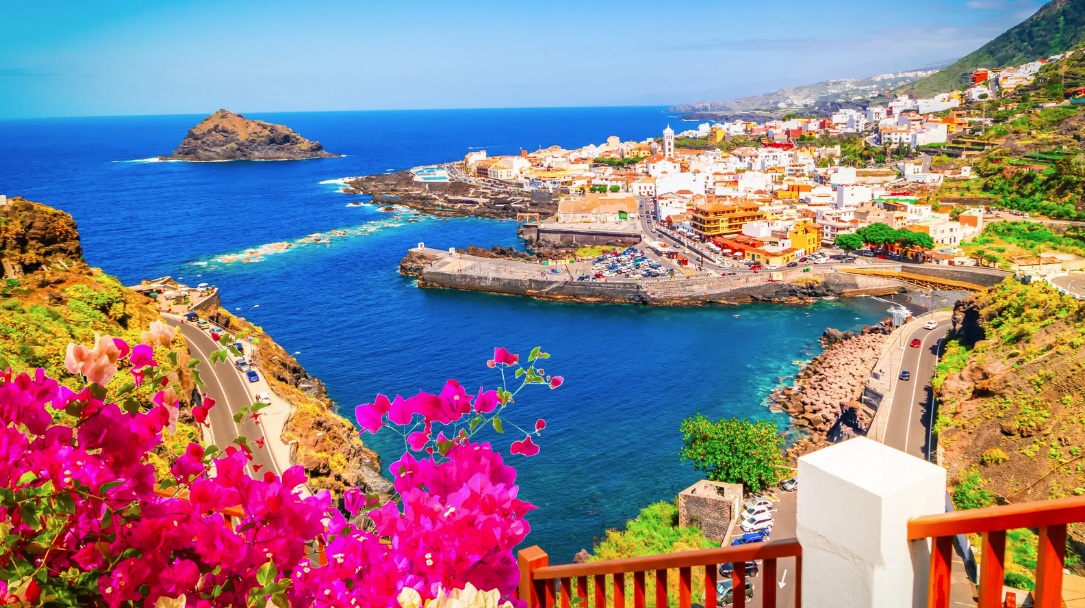
Shooting in Spain has become an increasingly strategic option for international producers, not only because of the country’s geographic diversity and production infrastructure, but also because of a fiscal framework that can vary significantly depending on the territory where a project is structured and filmed.
Where Spain’s Tax Credit Becomes More Competitive
At national level, Spain offers a tax deduction for international productions of 30% on the first €1 million of eligible expenditure and 25% on the remaining expenses, with a deduction cap of €20 million per production and €10 million per episode for series. Eligible expenditure generally includes costs incurred in Spain for the execution of foreign feature films, short films and audiovisual series, including fiction, animation and documentaries. Producers must work through companies registered with the ICAA and meet requirements such as cultural certification, minimum expenditure and final credit obligations.
The Spanish framework becomes even more competitive in territories with special fiscal regimes. The Canary Islands are one of the most attractive examples. Through their specific Economic and Fiscal Regime, the islands offer a higher incentive, generally presented as 45–50% for foreign productions, with basic requirements including at least €1 million in expenses in the Canary Islands and the involvement of a production company registered with the ICAA and tax resident in the islands. Canary Islands Film, the audiovisual department of the Canary Islands Government, also highlights the territory’s role as an umbrella for the islands’ film commissions, institutions and audiovisual companies.
The Canaries’ appeal is not only fiscal. The islands offer a dense variety of locations in a compact territory: volcanic landscapes, dunes, beaches, cliffs, forests, colonial towns, roads, industrial spaces and modern urban settings. This makes the archipelago particularly useful for productions looking to recreate different worlds without moving across long distances.
Navarra also offers a distinctive framework. For Spanish productions and co-productions, Navarra Film Industry lists a general 45% deduction, with a special 50% deduction on the first €3 million of the deduction base for categories such as animation, Basque-language works, productions led by women, documentaries, first works and short films. The region requires expenditure in Navarra to reach 40% of the investment, and the maximum deduction is €5 million. For services linked to foreign productions, the general deduction is 35% on the first €1 million of the deduction base, with expenses incurred in Navarra and a minimum of one week of shooting in the region.
The Basque Country has also strengthened its positioning through the fiscal systems of its historic territories. Film Basque Country presents incentives of up to 60%, with a potential additional 10% for works in Basque, making the framework particularly relevant for projects that can structure a substantial part of their eligible expenditure in the region. Within this context, Bizkaia, Gipuzkoa and Araba/Álava have become increasingly visible to producers looking at higher-intensity regional schemes, local crews, strong institutional support and locations that range from urban and industrial environments to coastal, rural and mountain settings.
Locations to Shoot in Spain
Spain’s production appeal is strongly tied to its ability to double for multiple countries and environments. Spain Film Commission underlines the country’s geographic, cultural and architectural variety, with mountains, deserts, forests, dunes, rivers, lakes, plains, plateaus and more than 8,000 kilometres of coastline across the Mediterranean, the Alboran Sea, the Cantabrian Sea and the Atlantic Ocean.
For producers, this means that Spain can serve very different creative needs: contemporary European cities, historical towns, castles, churches, fortresses, modern architecture, beaches, desert landscapes, green northern territories, island environments and rural regions with strong local identity. Madrid and Barcelona remain major production and service hubs, while territories such as the Canary Islands, Navarra, the Basque Country, Andalusia, Galicia, Valencia and the Balearic Islands offer different combinations of locations, crews, infrastructure and regional support.
Spain also benefits from a developed audiovisual ecosystem. ICEX-Invest in Spain describes the country as able to cover all phases of production, with more than 72,000 professionals and 6,700 companies active in the audiovisual industry. This production base is central to the country’s international competitiveness: the fiscal incentive is important, but its value depends on the availability of reliable service companies, local talent, equipment, studios, post-production capacity and experienced film commissions.
Official Resources for Producers
Producers considering Spain can consult the following official or institutional resources:
Spain Film Commission – national reference point for filming in Spain, tax incentives, locations and the film commission network.
Spain Film Commission – Filming Environments – overview of Spanish locations and landscapes.
Canary Islands Film – official audiovisual department of the Canary Islands Government, with information on incentives, locations and island film commissions.
Navarra Film Industry / Navarra Film Commission – official regional platform for incentives, services and production support in Navarra.
Film Basque Country – official regional resource for incentives, grants and production opportunities in the Basque Country.
ICEX-Invest in Spain – Audiovisual Industry – institutional information on Spain’s audiovisual ecosystem and investment environment.