


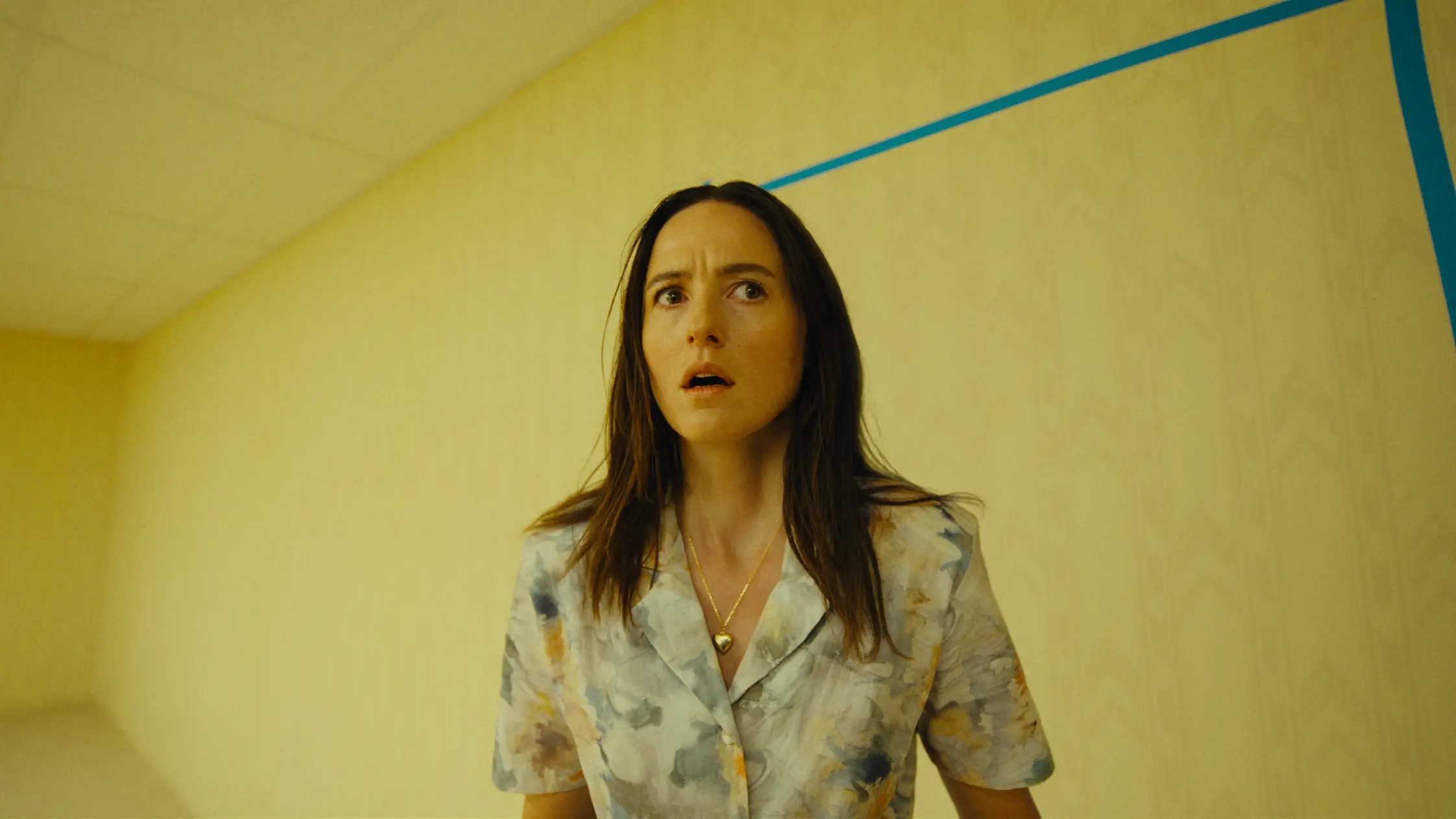
The box office success of Backrooms and Obsession is more than another sign that horror remains one of the most reliable theatrical genres. For the film industry, the stronger message is that digital-native creators, online horror communities and low-budget genre filmmaking are now generating measurable theatrical value.
At a time when studios continue to question how to bring younger audiences back to cinemas, both films suggest that Gen Z is not disconnected from the theatrical experience. The issue may be less about the cinema itself and more about the kind of stories, creators and communities that are being activated around a release.
Backrooms, released by A24, opened with an estimated $81.5 million in North America and $118 million worldwide, setting a new opening weekend record for the company. The result is particularly significant because the film reportedly cost around $10 million, giving it a commercial profile very different from that of a traditional studio tentpole.
From Internet Mythology to Theatrical Event
Directed and co-written by Kane Parsons, Backrooms grew out of an online horror phenomenon that had already developed a strong identity before entering the theatrical market. The original concept, built around the unsettling idea of endless empty rooms and liminal spaces, circulated as internet mythology before Parsons transformed it into a viral web series.
That transition matters. The film did not arrive as an unknown property looking for awareness through a conventional marketing campaign. It entered cinemas with an existing community, a recognizable aesthetic and a digital history that younger audiences had already helped to build.
For distributors and producers, this changes the risk equation. Online horror communities can function as early audience laboratories, testing tone, imagery, mythology and engagement before a feature film is financed or released. In the case of Backrooms, that community translated into sold-out screenings, group attendance and a high concentration of young viewers.
The audience data is one of the most relevant parts of the story. Reports indicate that the vast majority of the film’s opening weekend audience was under 35, with a particularly strong turnout among viewers under 25. This is exactly the demographic many theatrical releases struggle to mobilize.
Low Budgets, High Visibility, Stronger Margins
The performance of Obsession reinforces the same point from another angle. Directed by YouTuber Curry Barker and reportedly produced for under $1 million, the film continued to perform strongly in its third weekend, placing ahead of a major studio franchise title and building one of the year’s most notable sleeper runs.
This is where the business story becomes especially clear. These films are not only culturally efficient; they are financially efficient. Their budgets allow distributors to generate theatrical upside without requiring blockbuster-level exposure. In a market where mid-budget films are under pressure and franchise releases are no longer automatic guarantees, low-cost genre films with pre-existing digital awareness offer a more flexible commercial model.
The comparison with Star Wars: The Mandalorian and Grogu is symbolic. While the franchise title still operates on a much larger global scale, the fact that creator-led horror titles could compete so visibly in the domestic weekend ranking shows how theatrical attention is fragmenting. Familiar IP remains powerful, but online-native IP is becoming increasingly capable of creating event value on its own terms.
A New Talent Pipeline for Theatrical Cinema
The rise of filmmakers such as Kane Parsons and Curry Barker also points to a broader shift in talent discovery. Platforms like YouTube are no longer simply promotional spaces or secondary outlets. They are becoming development ecosystems where filmmakers can build audiences, refine storytelling languages and demonstrate proof of concept before entering the traditional industry.
For Hollywood, this is a strategic opportunity. Digital-native creators often arrive with direct audience relationships, strong visual identities and an understanding of how online communities behave. For independent distributors, horror specialists and sales companies, this opens a pipeline where audience validation can begin before the financing stage.
For the theatrical business, the lesson is not that every viral property should become a film. The lesson is that cinema can still become a social destination for younger audiences when the material feels connected to the worlds they already inhabit.
Backrooms and Obsession show that online communities are not only marketing audiences. They can be early validators and box office drivers. In a theatrical market looking for new ways to reduce risk and rebuild youth attendance, digital-native horror may be one of the clearest signals of where the next generation of film audience can come from.